
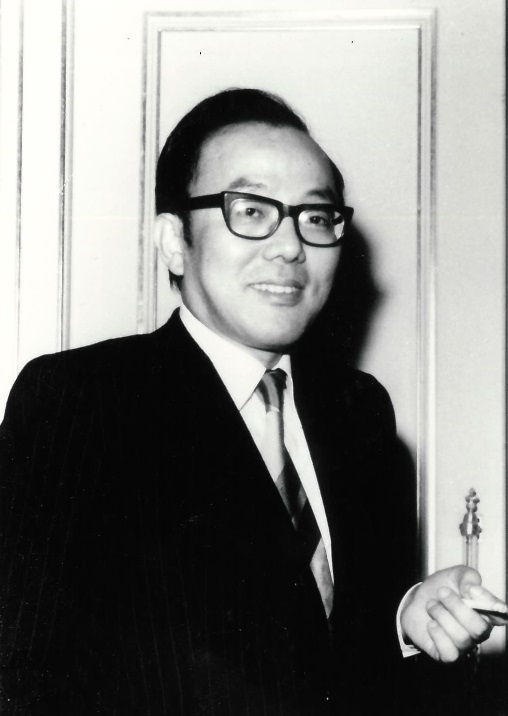
Shūsaku Endō, one of Japan's most influential twentieth-century novelists, left a lasting mark on world literature through his exploration of faith, cultural identity and the dialogue between Christianity and Japanese tradition. Born in Tokyo on 27 March 1923, Endō's childhood was profoundly shaped by his parents' divorce. After this difficult period, he moved to Kobe with his mother, where he was exposed to Catholicism through his aunt.
A writer shaped by France and Japan
Endō began studying French literature at Keio University in Tokyo in 1943. His studies were interrupted by the Second World War, during which he worked in a munitions factory because of his fragile health. After the war, he was awarded a scholarship to study French language and literature at the Catholic University of Lyon's ILCF. His stay in Lyon, from 1950 to 1953, proved decisive in shaping both his intellectual development and his literary career.
In Lyon, Endō immersed himself in French culture, but he was especially captivated by modern Catholic literature, particularly the works of Graham Greene and François Mauriac. Endō himself has described this period as a revelation, where he was confronted with a tension between Western literature and his own cultural identity. This experience profoundly influenced his worldview and his approach to religion in his later literary work.
After returning to Japan, Endō quickly established himself as one of the country's leading writers. In 1955, he won the prestigious Akutagawa Prize for his novel "Shiroi hito" ("The White Man"), marking the beginning of his literary success. Endō married Okada Junko in 1955, with whom he had a son, Ryunosuke, in 1956.
The influence of his time in Lyon can be seen in many facets of his work, particularly in his treatment of themes of faith and cultural identity. Endō has often explored the tensions between his Catholic faith and Japanese religious traditions, as well as the challenges of intercultural communication. His works are imbued with a deep reflection on the human condition and the moral dilemmas his characters face. Endō is often compared to Graham Greene, whose work he admired and who had a significant influence on his own writing.
For Endō, Lyon became an intellectual crucible where he refined his understanding of literature and faith, an experience that profoundly shaped the rest of his work.
Silence
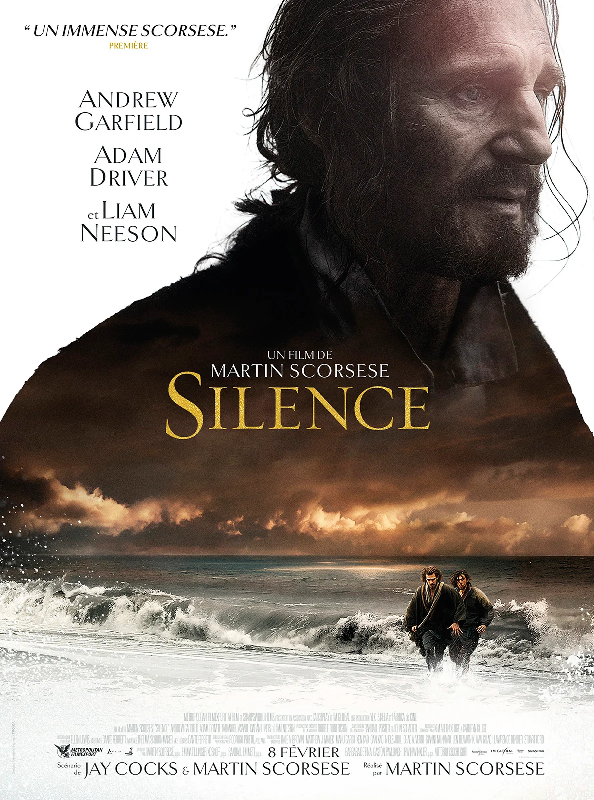
Shūsaku Endō's most famous work, "Silence" (沈黙, Chinmoku), has enjoyed a remarkable film adaptation. Directed by acclaimed American filmmaker Martin Scorsese, the film of the same name was hailed by critics and audiences alike when it was released in 2016. Scorsese, known for exploring spiritual and moral themes in his films, was deeply moved by the poignant story of "Silence".
"Silence" follows the story of Portuguese missionaries in 17th-century Japan, facing violent persecution as they attempt to spread their Christian faith in a hostile country. Scorsese brilliantly captures the moral and spiritual dilemmas facing the main characters, highlighting questions of faith, sacrifice and compromise.
The film adaptation of "Silence" has been praised for its faithfulness to Endō's novel while bringing a unique visual and emotional perspective to the story. The performances of the actors, notably Andrew Garfield, Adam Driver and Liam Neeson, were widely acclaimed for their depth and commitment to their roles.
Thanks to Martin Scorsese's adaptation, "Silence" has been brought to the screen with an emotional power and intellectual complexity that has captivated audiences around the world. This remarkable film adaptation has enabled Shūsaku Endō's timeless work to reach a wider audience and continue to provoke profound reflections on the nature of faith, suffering and redemption.
Did you know?
UCLy's House of Research pays tribute to Shūsaku Endō with a room named in his honour.